
Making an Appointment in French: Useful Vocabulary and Phrases
When you live in France, there’s one thing you notice quickly: everything runs on appointments. The doctor, the hairdresser, the bank, the prefecture, the mechanic… even simple errands require booking a time slot in advance. To settle in smoothly and manage your daily life without stress, it’s essential to know how to make an appointment in French.
In this article, you’ll discover the vocabulary you need and the phrases to use depending on the situation, and why appointments hold such a special place in French culture.
Basic Vocabulary for Making an Appointment
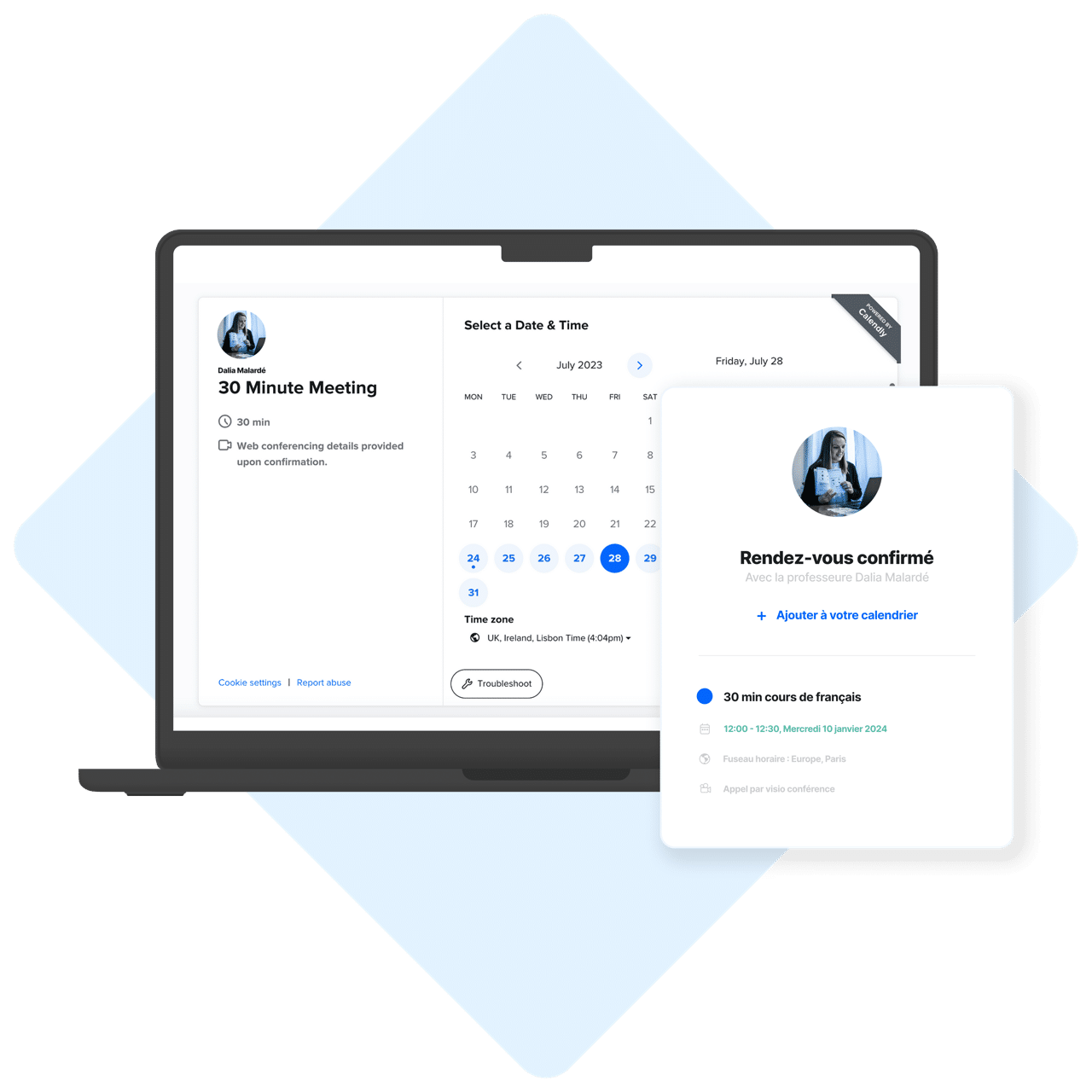
Before your first appointment in French, here are the words and expressions you need to know. The main word is of course un rendez-vous (often shortened to “RDV” in writing). To get one, you’ll need to prendre rendez-vous (make an appointment), fixer une date (set a date), or réserver un créneau (book a slot). This last one simply means the specific time slot — the day and hour — you’re given.
For instance, if your plans change, you can annuler (cancel), reporter (postpone), or décaler (shift) your appointment. And if you’re running late or can’t make it, it’s polite to let them know (prévenir) in advance. Similarly, for administrative appointments (prefecture, bank, post office), you’ll usually check in at a guichet (counter), where a staff member will assist you.
Useful Phrases to Get Started
Here are some useful phrases you can reuse as they are:
- “Bonjour, je voudrais prendre rendez-vous avec le docteur Martin.” (Hello, I’d like to make an appointment with Dr. Martin.)
- “Avez-vous un créneau libre la semaine prochaine ?” (Do you have an open slot next week?)
- “Est-ce que mardi matin vous conviendrait ?” (Would Tuesday morning work for you?)
- “Est-ce que je peux décaler mon rendez-vous à jeudi ?” (Can I move my appointment to Thursday?)
- “Je suis désolé(e), je dois annuler mon rendez-vous de demain.” (I’m sorry, I need to cancel my appointment tomorrow.)
- “Je vous appelle pour confirmer notre rendez-vous de vendredi.” (I’m calling to confirm our appointment on Friday.)
These phrases work just as well over the phone, in person, or by email, and they cover most situations you’ll come across in everyday life in France. The vocabulary shifts a bit if you need to make a doctor’s appointment, with a few more specific words to know.
Not sure what your French level is? Take the free 5-minute test and get your bonus ebook!
Formal or Informal Appointments: Which Phrases to Use
The tone you use when making an appointment changes depending on the situation. First, for a formal appointment, like at the doctor’s, the prefecture, or a government office, you’ll use vous and polite language:
- “Bonjour, je souhaite prendre rendez-vous pour un renouvellement de titre de séjour.” (Hello, I’d like to make an appointment to renew my residence permit.)
- “Est-ce que je peux avancer mon rendez-vous ?” (Can I move my appointment earlier?)
- “Pouvez-vous me confirmer la date et l’heure de mon rendez-vous ?” (Can you confirm the date and time of my appointment?)
On the other hand, for an informal appointment, say with a friend, the tone is more relaxed and you’d naturally switch to tu:
- “Tu es libre quand pour qu’on se voie ?” (When are you free to meet up?)
- “Je passe te voir vers 15h, ça te va ?” (I’ll stop by around 3 pm, does that work?)
Knowing how to adjust your register matters almost as much as the vocabulary itself. A French person will quickly notice if you’re too casual with your doctor, or too formal with your friend. This same logic applies in writing: in an email, the polite phrases you choose can also make the difference between a professional message and one that feels too casual.
The Appointment: A Deeply Rooted Habit in France
The French fondness for appointments comes largely from how the country’s administration is organized. It relies heavily on planning and reserved time slots, which helps avoid long lines. That said, it also requires some advance planning, especially for appointments in high demand, like seeing a specialist, where wait times can stretch to several weeks.
One cultural detail worth knowing: most professionals send an appointment reminder by text or email a few days ahead, a common practice in France that helps you stay on top of things. Punctuality matters too: showing up late to an appointment, especially a professional or administrative one, is generally frowned upon and can even mean having to book another slot.
There you have it! You can now confidently handle all your appointments, whether administrative or personal. And if you want to make faster progress in French, why not book… an appointment right now?